
Highland Park, TX Water Filtration Maintenance Tips

Hard water scale, odd tastes, and low flow can creep back if your system isn’t maintained. Use these water filtration maintenance tips to keep your water clean and pressure steady in Highland Park, TX. We’ll show you how to care for RO, carbon, UV, and softeners, and exactly when to call a pro. Bonus: there’s a free in-home water audit for qualified homeowners below.
Why Water Filtration Maintenance Matters
If you’ve invested in filtration, maintenance protects taste, protects plumbing, and protects appliances. Sediment loads clog cartridges, chlorine exhausts carbon, and biofilm can grow in underused lines. Left alone, you’ll get pressure drop, channeling in media tanks, and membranes that foul early. The result is poor taste, scale on fixtures, or bacteria risk.
Two facts to ground your plan:
- NSF/ANSI 42, 53, and 58 standards define performance claims for carbon and reverse osmosis systems. Matching maintenance to a system that’s certified to these standards preserves the results you paid for.
- Texas public water systems publish annual Consumer Confidence Reports under TCEQ rules. Use your local report as a baseline for chlorine, hardness, and disinfection byproducts to set service intervals.
How to Build a Simple Maintenance Schedule
Design your schedule around three levers: water quality, water usage, and component type.
- Water quality: Higher sediment or hardness shortens prefilter and softener cycles. Chlorine shortens carbon life. If a water-quality test shows high turbidity or total chlorine, tighten intervals.
- Water usage: More showers, laundry, or irrigation equals more gallons through media. Seasonal guests can double usage for a month.
- Component type: Cartridges, media tanks, RO membranes, UV lamps, and softeners each have different service needs.
A practical starter cadence for many homes:
- Sediment prefilter inspection every 3 months; replace at 6 months or when pressure drops noticeably.
- Carbon cartridge every 6 to 12 months, carbon tank media every 5 to 10 years depending on chlorine levels and flow.
- RO pre/post filters every 6 to 12 months; RO membrane every 2 to 5 years based on TDS reduction.
- UV lamp every 12 months; clean the quartz sleeve every 6 to 12 months.
- Softener: check salt monthly, clean brine tank annually; resin cleaning as needed.
Signs Your System Needs Service in Highland Park, TX
Highland Park homes often blend older copper with newer PEX, so pressure changes are easy to feel. Watch for:
- Taste or odor returning, especially chlorine or earthy notes.
- Noticeable flow loss at multiple fixtures.
- Cloudy water that clears from bottom up after sitting, a sign of air or fine particulate.
- Scale dots on glassware even after a recent clean.
- RO system drain line running constantly or TDS readings rising.
- UV controller alarms or indicator lights signaling lamp replacement.
Pro tip: A visible pressure gauge and accessible ball valves near your filtration setup make diagnostics fast. Nation Plumbing Services installs serviceable layouts so you can isolate and test stages quickly.
Cartridge and Sediment Filters: Care and Replacement
Sediment cartridges protect everything downstream. Treat them as your first sacrificial stage.
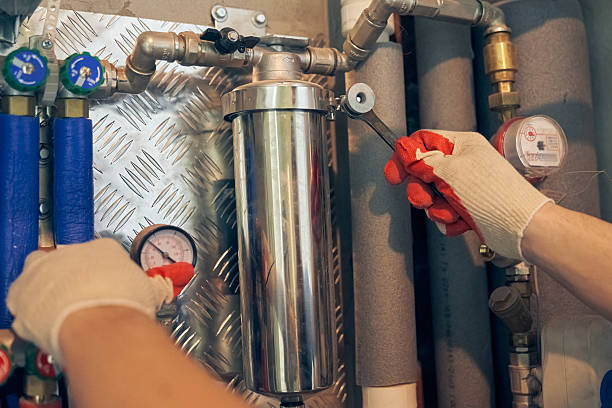
- Inspection: Check for discoloration and slime. A tan or rust color indicates iron. A black sheen can indicate carbon fines or biofilm.
- Pressure drop: If your gauge shows a 10 psi or greater loss across the filter, replace the cartridge.
- Replacement: Spin-down or pleated filters can be rinsed, but standard poly depth filters should be replaced on schedule.
- Sanitation: When changing cartridges, sanitize the sump and O-ring. Lubricate O-rings with food-grade silicone and hand tighten only.
Tip: Keep two cartridges on hand. Replace the used one and immediately reorder a spare so you’re never stuck.
Carbon Media and KDF Systems: Performance Checks
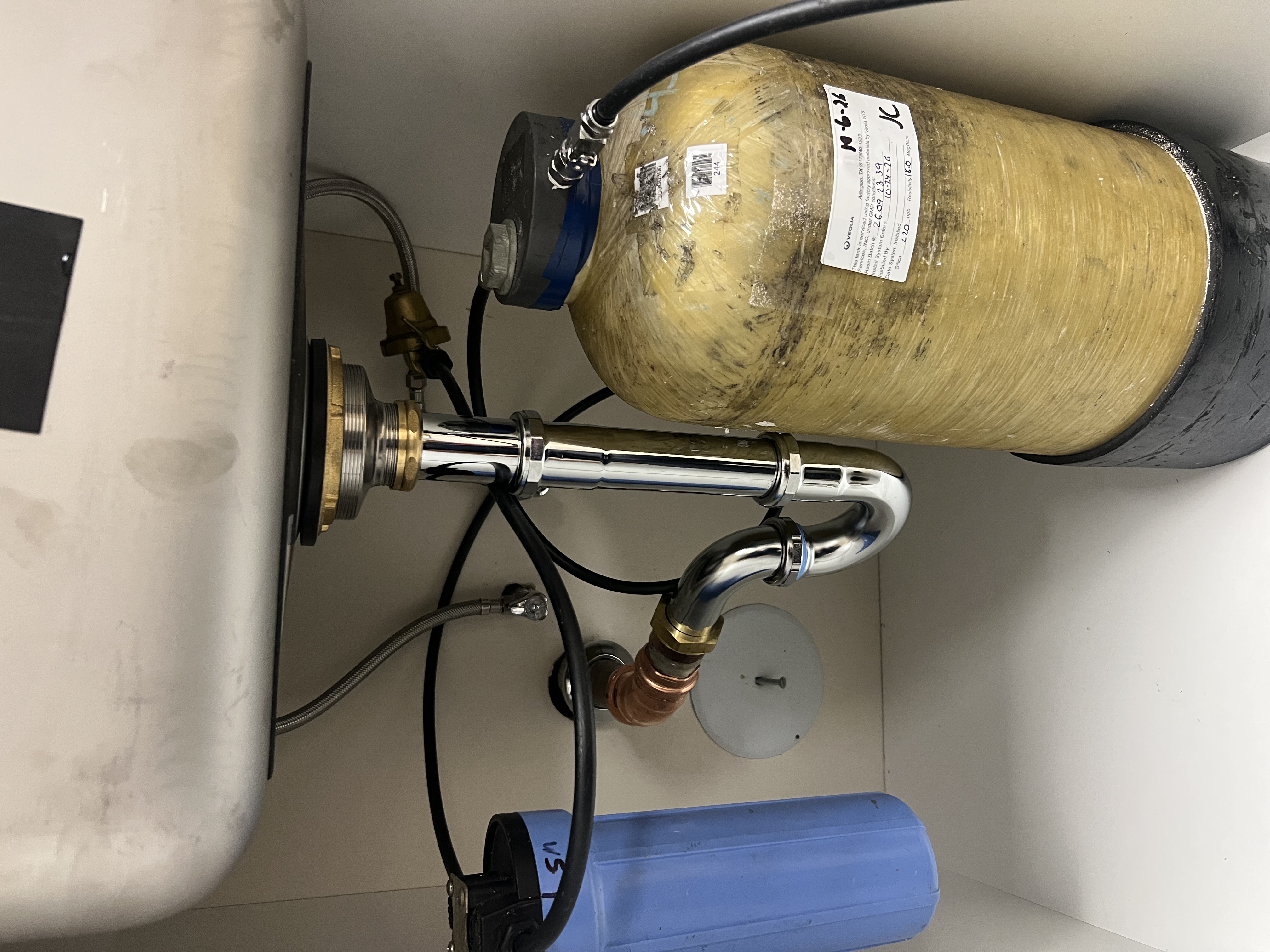
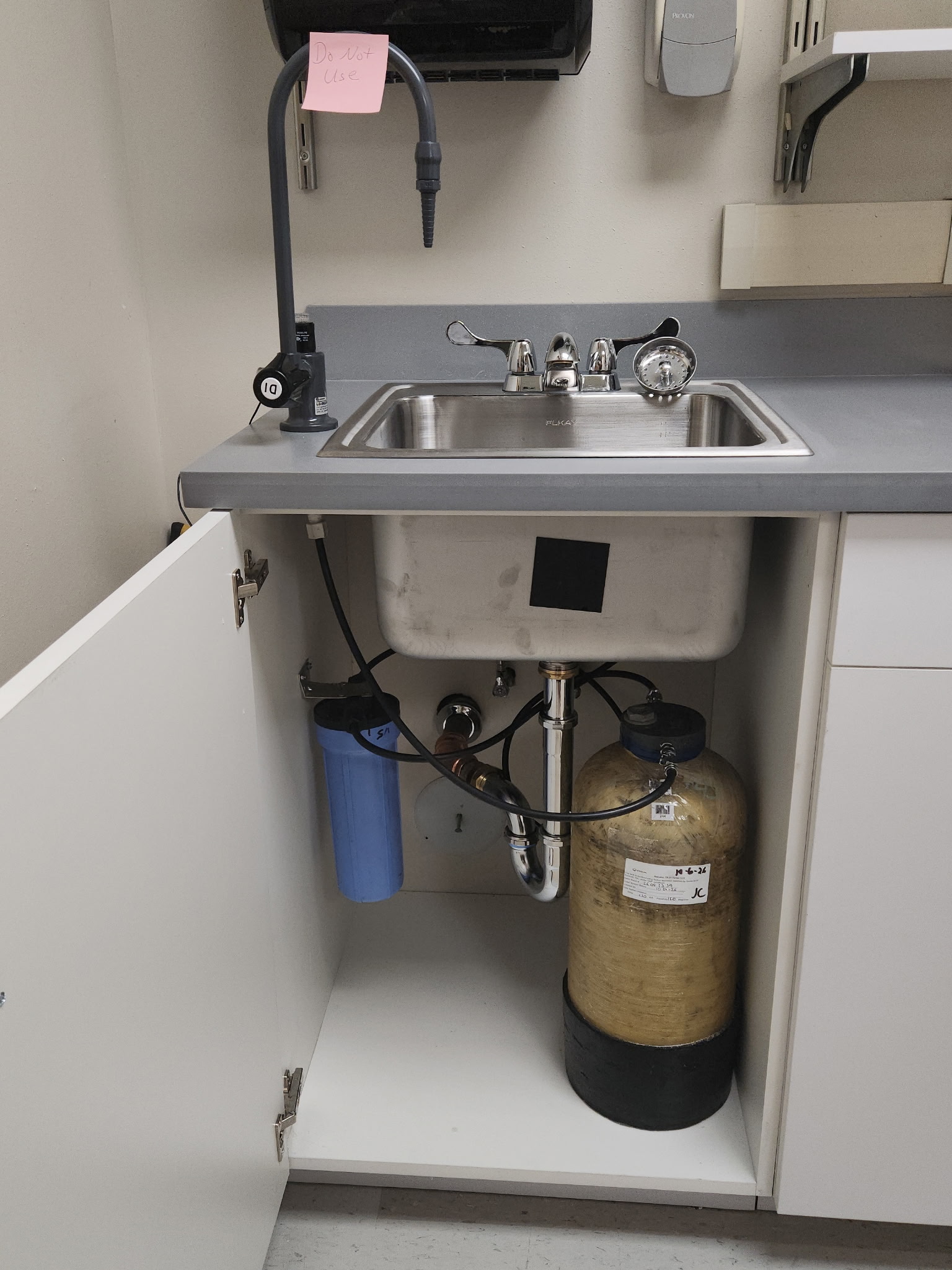
Granular activated carbon (GAC) and carbon block reduce chlorine, taste, and odor. Many whole-home tanks include KDF-55 to help with chlorine and heavy metals.
- Monitoring: If you can smell chlorine at a tap after running water 60 seconds, the carbon is likely exhausted.
- Channeling: In tall tanks, uneven flow creates channels that bypass media. Annual backwashing and proper flow rates prevent this.
- Media age: Cartridge carbon is typically 6 to 12 months. Tank media often lasts 5 to 10 years depending on chlorine levels and gallons treated.
- KDF-55: This media works best with adequate contact time. If your flow is too high for the tank size, KDF effectiveness drops.
Maintenance move: If your system includes a bypass, use it to test incoming water versus treated water for smell and taste. It’s a quick way to confirm media life.
Reverse Osmosis Maintenance for Dallas County Homes
Point-of-use RO gives premium drinking water but needs consistent care.
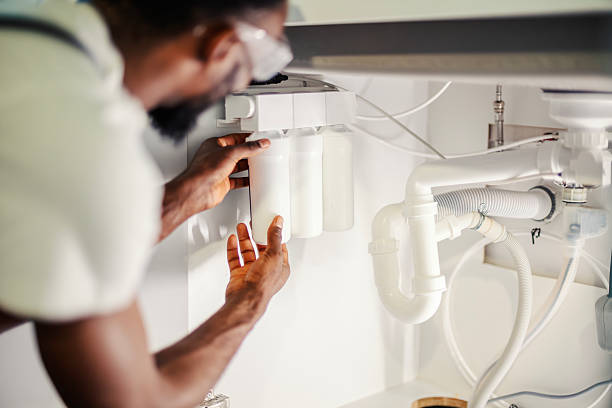
- Pre/post filters: Replace every 6 to 12 months to protect the RO membrane and keep taste crisp.
- Membrane: Test total dissolved solids (TDS). If rejection drops below manufacturer targets, replace the membrane, usually every 2 to 5 years.
- Storage tank pressure: With the system off and tank empty, set air charge to manufacturer specs, commonly around 7 to 8 psi for many under-sink tanks.
- Sanitize: Annual sanitation of the RO housing and lines prevents biofilm.
- Drain line noise or constant trickle: Could indicate a failing check valve or clogged flow restrictor. Don’t ignore it. Wasted water equals wasted money.
Mid-article CTA: Schedule your free in-home water audit with Nation Plumbing Services. Call 469-825-9053 or book at https://www.nationplumbingservices.com/.
UV Purifiers and Disinfection Steps
UV systems neutralize microbes without chemicals. They are only effective with clean, clear water.
- Pretreatment first: Install UV after sediment and carbon. Turbidity shields microbes from UV-C light.
- Lamp changes: Replace the UV-C lamp annually. After 12 months, intensity falls below target even if the lamp still glows.
- Quartz sleeve: Clean every 6 to 12 months or replace if etched. A cloudy sleeve blocks UV.
- Sensors and alarms: Many controllers track lamp hours. Do not bypass alarms.
Note: A UV system does not add a residual disinfectant. If your line has long dead-legs, periodic sanitation helps control regrowth.
Softener and Conditioner Upkeep
Water softeners use ion exchange to remove hardness. Conditioners alter scale behavior without salt.
- Salt-based softeners: Check salt monthly and keep the brine level above the grid. Break salt bridges with a broom handle if the top crust hardens.
- Resin health: Iron and organics can foul resin. Use a resin cleaner as directed if hardness leaks through.
- Regeneration settings: Set based on hardness and usage. Over-regeneration wastes salt and water; under-regeneration causes scale.
- Conditioners: Media-based scale control does not remove hardness, so spotting can still appear. Validate performance by tracking scale at fixtures, not just feel.
If your dishwasher or water heater shows new scale, call for a hardness test and settings review.
Professional Inspection Checklist for Highland Park Homes
During a professional visit, we validate both water quality and system function. Here’s what Nation Plumbing Services includes when we maintain filtration for Highland Park and nearby areas:
- Water tests: Chlorine, hardness, TDS, and turbidity as needed. We align intervals to actual data.
- Pressure checks: Before and after each stage to spot clogs or failing media.
- Valve and gauge inspection: Accessible ball valves, bypasses, and visible pressure gauges are exercised to ensure serviceability.
- Leak and support review: We confirm secure brackets, tidy routing, and dry fittings so your install stays clean and safe.
- Sanitation: We sanitize housings and lines during component changes to keep biofilm out.
- Documentation: We record dates and results so next service is predictable, not a guess.
Our approach matches what our website promises: routine maintenance plans that include inspections, water pressure checks, drain evaluations, and fixture reviews, plus water-quality testing to keep recommendations data-driven.
Special Offer
- Free in-home water audit with system recommendations. Call 469-825-9053 or schedule at https://www.nationplumbingservices.com/ before 2026-11-04.
- Routine filtration tune-up and test from $99–$189 in DFW. Book before 2026-11-04.
- Base annual service plan estimates from $350–$900. Ask for the right-sized plan before 2026-11-04.
Tip: Mention this blog when you call so we apply the free audit to your visit if you qualify.
Frequently Asked Questions
How often should I replace a sediment prefilter?
Check it every 3 months and replace at 6 months, or sooner if you see a big pressure drop or visible discoloration. A clogged prefilter starves everything downstream and can damage carbon or RO stages.
What do NSF/ANSI 42, 53, and 58 mean?
NSF/ANSI 42 covers taste, odor, and chlorine reduction. NSF/ANSI 53 covers health-related contaminants like lead. NSF/ANSI 58 applies to reverse osmosis performance. Match filters to the standard for the claim you need.
How do I know my RO membrane is failing?
Use a TDS meter. If rejection falls below the system’s spec or taste declines, replace the membrane, usually every 2 to 5 years. Also change pre and post filters on schedule.
Do I need UV if I already have carbon?
Carbon improves taste but does not disinfect. UV-C provides disinfection if water is prefiltered for clarity. Replace the UV lamp annually and keep the quartz sleeve clean.
What’s the difference between a softener and a conditioner?
A softener uses ion exchange to remove hardness. A conditioner changes how minerals crystallize so scale is less likely to stick. Conditioners don’t remove hardness, so some spotting can remain.
In Summary
With a simple schedule and a few quick checks, you can keep carbon, RO, UV, and softeners working reliably. If you’re noticing taste, odor, or pressure changes, get water tested and adjust intervals. For Highland Park, TX homeowners, Nation Plumbing Services brings owner-led care, serviceable installs, and data-backed maintenance.
Ready to Improve Your Water?
Claim your free in-home water audit today and dial in the right schedule for your home. Call 469-825-9053 or book at https://www.nationplumbingservices.com/. Serving Highland Park, Dallas, Plano, Irving, and Garland.
About Nation Plumbing Services
Nation Plumbing Services delivers owner-led care, transparent pricing, and clear explanations. We install and maintain water filtration systems with serviceable layouts, pressure gauges, and accessible ball valves for easy diagnostics. Our routine maintenance plans include inspections, water pressure checks, and drain evaluations. We proudly serve Dallas, Highland Park, Plano, Irving, and Garland with residential and light commercial expertise. Book direct for personalized attention and reliable workmanship backed by thorough testing and data-driven recommendations.
Sources11
Source links open in a new tab.
- 10% Off All Services & Repairsnationplumbingservices.com (opens in a new tab)
- Water softener or conditioner: Purpose: controls scale that shortens appliance life. Cost: 1,800 to 3,500 installed. Salt 5 to 15 per month for ion exchange.nationplumbingservices.com (opens in a new tab)
- With multi-component service, expect 149–349 dollars including testing, sanitation, and calibrationnationplumbingservices.com (opens in a new tab)
- Happy comment by Merri Weidlergoogle.com (opens in a new tab)
- Happy comment by Ashley Hernandezgoogle.com (opens in a new tab)
- Happy comment by Alia Bidgoodgoogle.com (opens in a new tab)
- Happy comment by Christopher Thompsongoogle.com (opens in a new tab)
- University Park, TX Water Filtration Tips — Plumbing Care | Nation Plumbing Servicesnationplumbingservices.com (opens in a new tab)
- Nation Plumbing Services | Project Gallerynationplumbingservices.com (opens in a new tab)
- Allen, TX Water Filtration Guide — Expert Plumbing Tips | Nation Plumbing Servicesnationplumbingservices.com (opens in a new tab)
- Plumbing in Greater Allen Area | Rise Plumbing Systemsnationplumbingservices.com (opens in a new tab)